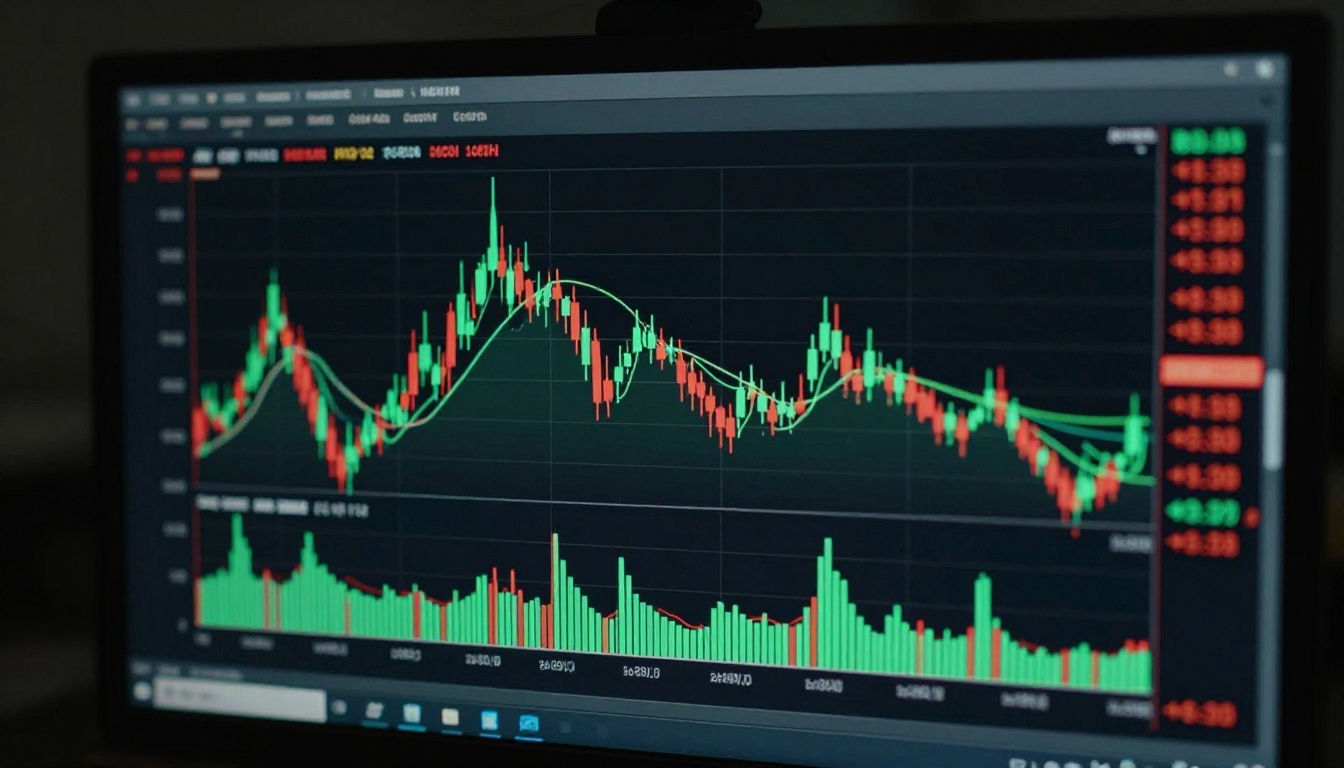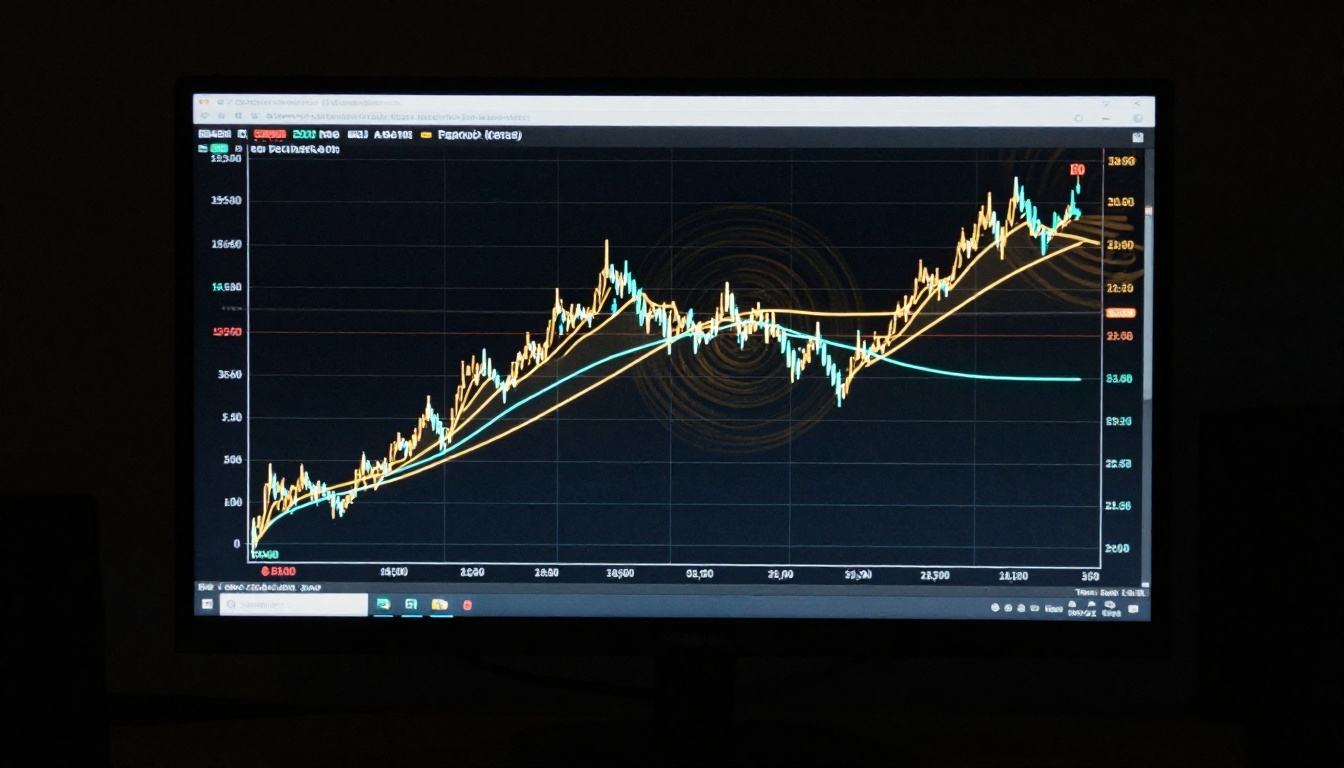
Moving averages are probably the most widely used indicator in trading. They appear on nearly every chart, in every asset class, across every timeframe. And yet, the number of traders who misuse them, over-rely on them, or misunderstand what they actually show is staggering.
At their core, moving averages do one thing: smooth out price data over a set number of periods to reveal the underlying trend. They are lagging indicators by design. They tell you where price has been, not where it is going. That sounds like a limitation, but it is actually their strength. In a world of noisy tick-by-tick data, the ability to see the trend beneath the chaos is valuable.
The challenge is knowing which type to use, which period to set, and when the signals they generate are worth acting on versus when they will lead you straight into a losing trade.
Simple Moving Average vs Exponential Moving Average
There are two types of moving averages that matter for most traders: the Simple Moving Average (SMA) and the Exponential Moving Average (EMA). Every other variant, Weighted, Hull, DEMA, and so on, is a refinement of these two core concepts.
Simple Moving Average (SMA)
The SMA is the arithmetic mean of the last N closing prices. A 20-period SMA on a daily chart adds up the last 20 closing prices and divides by 20. When a new candle closes, the oldest data point drops off and the newest one takes its place.
SMA = (Sum of closing prices over N periods) / N
The SMA gives equal weight to every data point in the lookback window. The closing price from 20 days ago has exactly the same influence as yesterday's close. This makes the SMA smoother and slower to react to sudden price moves.
Exponential Moving Average (EMA)
The EMA applies a multiplier that gives more weight to recent prices. The formula uses a smoothing factor of 2 / (N + 1), so a 20-period EMA assigns roughly 9.5% weight to the most recent close, with older data points receiving exponentially less influence.
EMA = (Close x Multiplier) + (Previous EMA x (1 - Multiplier))
Because the EMA front-loads recent data, it reacts faster to price changes. It hugs price more tightly than the SMA, which means it gives earlier signals but also more false signals in choppy conditions.
Which One Should You Use
Neither is objectively better. The choice depends on what you are trying to accomplish and how you handle false signals.
SMA vs EMA Comparison
| Feature | SMA | EMA |
|---|---|---|
| Calculation | Equal weight to all periods | More weight to recent prices |
| Responsiveness | Slower, smoother | Faster, more reactive |
| False Signals | Fewer in choppy markets | More in choppy markets |
| Trend Identification | Cleaner on higher timeframes | Better for short-term entries |
| Common Use | 50, 100, 200-day trend filters | 9, 12, 21-day for entries and exits |
| Best For | Swing and position trading | Day trading and scalping |
In practice, many traders use both. An EMA on a lower timeframe for timing entries, with an SMA on a higher timeframe for directional bias. Traders focused on scalping and day trading tend to prefer EMAs, while position traders often stick with SMAs.
Common Periods and What They Tell You
Not all moving average periods are created equal. Certain values have become institutional standards because enough traders watch them that they become self-fulfilling to a degree. Price often reacts at these levels not because of any mathematical magic, but because thousands of traders have their charts set to the same values.
Popular Moving Average Periods
| Period | Timeframe | What It Shows | Typical Use |
|---|---|---|---|
| 9-10 | Short-term | Very recent momentum | Scalping entries, EMA crossovers |
| 20-21 | Short-term | Near-term trend direction | Swing trading, Bollinger Band midline |
| 50 | Medium-term | Intermediate trend health | Trend confirmation, dynamic S/R |
| 100 | Medium-term | Bridge between 50 and 200 | Filter for medium-term trades |
| 200 | Long-term | Major trend direction | Institutional trend filter, bull/bear gauge |
The 200-day SMA deserves special attention. Fund managers, algorithmic trading systems, and financial media all reference it. When a major index or stock is trading above its 200-day SMA, the consensus view is bullish. Below it, bearish. This is not a universal truth, but it is a widely watched benchmark that influences institutional behavior.
The 50-day SMA is the most common intermediate filter. A stock trending above its 50-day SMA with rising slope is generally considered to be in a healthy uptrend. When price breaks below the 50-day and the average starts curving down, momentum is shifting.
The Golden Cross and Death Cross
The Golden Cross occurs when a shorter-term moving average (typically the 50-day SMA) crosses above a longer-term moving average (typically the 200-day SMA). The Death Cross is the opposite: the 50-day SMA crosses below the 200-day SMA.
These crossovers generate headlines. Financial media treats them as definitive bull or bear signals. The reality is more nuanced.
How Reliable Are They
Studies on the S&P 500 going back decades show that Golden Crosses have historically preceded further upside roughly 70-75% of the time over the following 12 months. That sounds compelling, but consider the context: the S&P 500 has been in an uptrend for most of its history. The market goes up more often than it goes down, so a bullish signal will naturally have a high hit rate.
The more useful question is whether these signals outperform a simple buy-and-hold approach. The evidence is mixed. In strongly trending markets, the Golden Cross tends to confirm trends that are already well underway. By the time the 50-day SMA crosses above the 200-day, a significant portion of the move has already happened.
Death Crosses have a worse track record. Several notable Death Cross signals, including those in 2016 and 2020, were followed by sharp reversals to the upside. The 2020 Death Cross on the S&P 500 occurred near the COVID bottom, right before one of the fastest recoveries in market history.
Golden Cross and Death Cross Signal Characteristics
| Characteristic | Golden Cross | Death Cross |
|---|---|---|
| Definition | 50 SMA crosses above 200 SMA | 50 SMA crosses below 200 SMA |
| Historical Win Rate (S&P 500, 12-month) | 70-75% | 50-55% |
| Average Signal Lag | 2-4 months after trend begins | 2-4 months after decline begins |
| False Signal Rate | Lower in trending markets | Higher — often signals near bottoms |
| Best Use | Confirm existing uptrend | Risk management filter, not short signal |
The Golden Cross and Death Cross work best as confirmation tools, not as standalone entry or exit signals. By the time they trigger, the early move is over. Their value is in filtering out trades against the major trend.
Moving Averages as Dynamic Support and Resistance
One of the most practical uses of moving averages is as dynamic support and resistance levels. Unlike horizontal support and resistance, which are fixed at specific price points, moving averages shift with each new bar. They create a rising floor in uptrends and a declining ceiling in downtrends.
During strong trends, price often pulls back to a key moving average, finds support (or resistance), and then resumes the trend. This behavior is observable across every liquid market and every timeframe.
Here is how it typically plays out:
- In a strong uptrend: Price pulls back to the 20 EMA, bounces, and continues higher. If the pullback is deeper, it may test the 50 SMA instead.
- In a moderate uptrend: The 50 SMA acts as primary support. Breaks below it often lead to a test of the 100 or 200 SMA.
- In a downtrend: Rising price attempts are capped at the 20 EMA or 50 SMA, which now act as overhead resistance.
The key is that moving averages work as dynamic S/R because other traders are watching the same levels. When the 50-day SMA on Apple or the EUR/USD lines up with a high-volume area, the confluence of technical signals increases the probability of a reaction at that level.
However, moving averages do not act as support or resistance in ranging markets. When price is trading sideways, MAs flatten out and price crosses them repeatedly in both directions. This is one of the most common traps traders fall into: trying to use MA bounces in a market that has no trend.
Moving Average Crossover Strategies
Beyond the Golden Cross and Death Cross, traders use faster crossover combinations for more active trading. The logic is straightforward: when a shorter MA crosses above a longer MA, momentum is shifting bullish. When it crosses below, momentum is shifting bearish.
Common Crossover Pairs
- 9 EMA / 21 EMA: Popular among day traders and swing traders. Generates frequent signals. Requires tight position sizing because the whipsaw rate is high.
- 20 SMA / 50 SMA: A middle ground. Fewer signals, better signal quality. Works well on daily and 4-hour charts.
- 50 SMA / 200 SMA: The Golden/Death Cross. Best for long-term trend direction. Too slow for active trading.
Setting Realistic Expectations
Moving average crossover systems, when backtested in isolation, tend to underperform buy-and-hold in trending markets and lose money in ranging markets. This is not an opinion. Decades of backtesting data across multiple markets confirms it. The whipsaw problem, where price crosses back and forth generating repeated false signals, erodes returns through transaction costs and small losses that compound.
That does not mean crossovers are useless. They become useful when combined with filters:
- Trend filter: Only take crossover buy signals when price is above the 200 SMA. Only take sell signals below it.
- Volume confirmation: Require above-average volume on the crossover bar to filter out noise.
- ADX filter: Only trade crossovers when the ADX (Average Directional Index) is above 20-25, indicating a trending market rather than a range.
- Candlestick confirmation: Look for a strong candlestick pattern confirming the crossover direction before entering.
The crossover itself is the hypothesis. The filters are the evidence that supports or refutes it.
Common Mistakes with Moving Averages
Moving averages are simple to plot but easy to misuse. These are the most common errors.
Using MAs in Ranging Markets
This is the single biggest source of MA-related losses. When a market is trading sideways, every moving average combination will generate whipsaw after whipsaw. The 50 SMA flattens, price crosses it five times in two weeks, and each crossing looks like a signal but is really just noise. Before relying on MA signals, confirm that the market is actually trending. A simple test: is the 50 SMA clearly sloping in one direction? If not, the market is probably ranging, and MA-based strategies will underperform.
Curve Fitting to Historical Data
Optimizing MA periods to fit past data is a reliable way to build a system that works perfectly in backtesting and fails in live trading. If someone tells you that a 17-period EMA crossed with a 43-period SMA is the "optimal" setting, they have likely overfit their backtest. Stick to round, widely-watched periods: 10, 20, 50, 100, 200. The edge in moving averages comes from the fact that many traders watch the same levels, not from finding an obscure combination.
Treating Every Crossover as a Trade
A crossover is a data point, not a trade signal by itself. Entering every time two lines cross is a recipe for death by a thousand small losses. Crossovers need context: what is the higher timeframe trend? Is there confluence with a key support or resistance level? Is volume confirming the move?
Ignoring the Lag
Every moving average lags price. A 200-day SMA lags significantly more than a 10-day EMA, but they all lag. This means that by the time an MA confirms a trend change, the early movers have already entered and the risk/reward has shifted. Traders who wait for MA confirmation and then chase the move often enter at the worst possible time, right before a pullback.
Combining Moving Averages with Other Tools
Moving averages work best as one layer in a multi-factor analysis framework, not as a standalone system. Here are practical combinations:
- MAs + Horizontal Support/Resistance: When a key moving average aligns with a horizontal level that has been tested multiple times, the confluence creates a higher-probability trade location. If the 50-day SMA is sitting at the same level as a clear horizontal support zone, that level deserves attention.
- MAs + Volume: A price bounce off the 200-day SMA on above-average volume is more significant than a bounce on thin volume. Volume validates whether institutional traders are defending the level.
- MAs + RSI: If price pulls back to the 50 SMA while RSI reaches oversold territory (below 30), the probability of a bounce increases. Two indicators confirming the same thesis is stronger than one.
- MAs + Price Action: A bullish engulfing candle forming right at the 20 EMA during an uptrend is a textbook pullback entry. The moving average defines the trend; the candlestick pattern defines the entry trigger.
No single indicator provides an edge in isolation. The value of moving averages is in providing structure, defining the trend, identifying potential support and resistance, and filtering out trades that go against the prevailing direction. The entry trigger should come from something else.
Key Takeaways
Moving averages are trend-following tools, not crystal balls. They tell you where price has been, and by extension, the direction of least resistance going forward. Use them as filters and context, not as standalone signals.
- The SMA weights all data equally and is smoother; the EMA reacts faster by weighting recent data. Neither is universally better.
- The 20, 50, and 200-period averages are the most widely watched. Their power comes partly from the fact that so many traders use them.
- The Golden Cross (50 SMA crossing above 200 SMA) has a decent historical track record but signals late. The Death Cross is even less reliable as a standalone signal.
- Moving averages act as dynamic support and resistance in trending markets but generate noise in ranges. Always confirm the trend before relying on MA signals.
- Crossover strategies need additional filters (volume, ADX, candlestick confirmation) to be practical. Raw crossovers alone tend to underperform.
- Avoid curve-fitting obscure MA periods. Stick to round, institutional standard numbers.
Disclaimer: This content is for educational purposes only and does not constitute financial advice. Trading involves substantial risk of loss. Past performance does not guarantee future results.