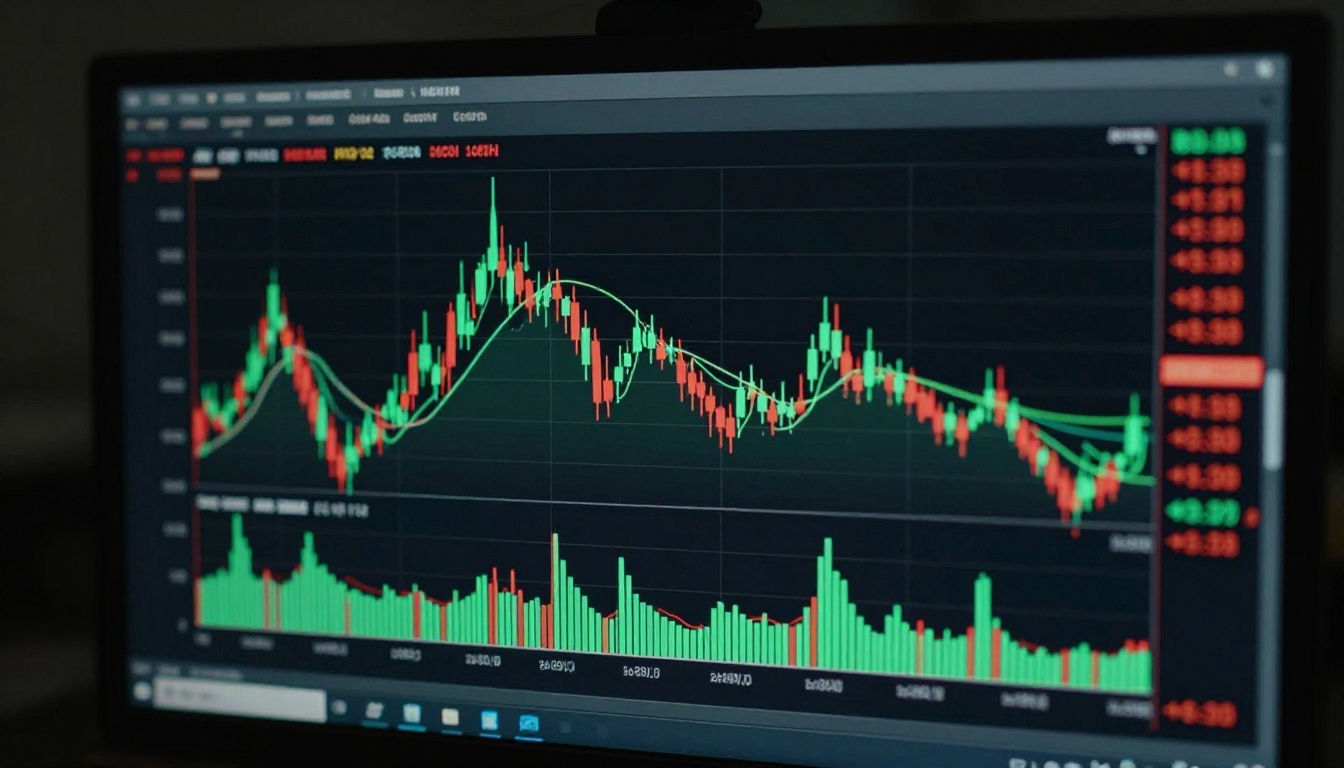
A candlestick chart is the default view on almost every trading platform for a reason. Each candle packs four data points — open, high, low, close — into a single visual shape that tells you what buyers and sellers did during that time period. Line charts show you where price went. Candlestick charts show you how it got there, who was winning, and where they gave up.
This guide covers the anatomy of a single candle, the six patterns you need to know first, and the framework for reading them without fooling yourself.
Anatomy of a Candlestick
Every candlestick represents a specific time period — one minute, one hour, one day, one week — depending on your chart settings. Regardless of the timeframe, the structure is always the same.
Candlestick Anatomy
| Component | What It Represents | What It Tells You |
|---|---|---|
| Body | Distance between open and close | How much ground buyers or sellers gained during the period |
| Upper Wick (Shadow) | Distance from body top to the high | Prices that were reached but rejected — sellers pushed back |
| Lower Wick (Shadow) | Distance from body bottom to the low | Prices that were reached but rejected — buyers pushed back |
| Green (Bullish) Candle | Close is higher than open | Buyers won the period |
| Red (Bearish) Candle | Close is lower than open | Sellers won the period |
| Open | The first traded price of the period | Where the battle started |
| Close | The last traded price of the period | Where the battle ended |
The body tells you who won. A long green body means buyers dominated from open to close. A long red body means sellers did. But the wicks often tell a more important story than the body itself.
A candle with a small body and a very long lower wick says: sellers pushed price down aggressively during the period, but buyers fought back and reclaimed most of that ground before the close. That rejection of lower prices carries meaning — especially if it happens at a support level.
A candle with a small body and a very long upper wick says the opposite: buyers tried to push higher but got overwhelmed. The market rejected those higher prices. Context determines whether that rejection matters or is just noise.
Context Is Everything
This is the single most important section of this guide. A candlestick pattern means nothing in isolation. The same pattern can be bullish, bearish, or meaningless depending on three factors:
- Trend — Is the price in an established uptrend, downtrend, or range? Reversal patterns only matter when there is something to reverse.
- Location — Is the candle forming at a significant support level, resistance level, moving average, or just in the middle of nowhere?
- Volume — Did the candle form on higher-than-average volume? Higher volume behind a pattern gives it more weight.
Here is the single most important principle in candlestick reading: patterns are a shift in probability, not a guarantee. A bullish hammer at strong support after a prolonged downtrend shifts the odds toward a bounce. It does not promise one. If you treat patterns as signals to act on blindly, you will lose money. If you treat them as one piece of evidence within a larger case, they become genuinely useful.
Six Essential Candlestick Patterns
There are dozens of named candlestick patterns. Most of them are minor variations of the same themes. These six cover the core concepts. Learn to read these well and you will understand what the others are trying to say.
Doji
A doji forms when the open and close are virtually identical, producing a very small (or nonexistent) body with wicks on either side. It signals indecision — neither buyers nor sellers managed to gain meaningful ground. A doji is neutral on its own. It matters when it appears at the end of a strong trend, especially near a key level. A doji after a long rally at resistance suggests the trend may be running out of steam. A doji in the middle of a range is just indecision within indecision — not useful.
Bullish Engulfing
A bullish engulfing is a two-candle pattern. A small red candle is followed by a larger green candle whose body completely engulfs the previous candle's body. It shows that sellers started in control but buyers overwhelmed them decisively. The most powerful bullish engulfing candles appear at the bottom of downtrends, near support levels, and on increased volume. The bigger the second candle relative to the first, the stronger the signal.
Bearish Engulfing
The mirror image. A small green candle is followed by a larger red candle that completely engulfs it. Buyers started in control but sellers took over and then some. This pattern is significant at the top of uptrends and near resistance. If you see a bearish engulfing candle at a level where price has been rejected before, and volume is elevated, that is worth paying attention to.
Hammer
A hammer has a small body near the top of the candle and a long lower wick — at least twice the length of the body. The color of the body matters less than the shape. It forms during a downtrend and signals that sellers pushed price significantly lower during the period, but buyers stepped in and drove it back up near the open. The rejection of lower prices is the key message. Hammers are most reliable at established support zones and after extended declines. A hammer in the middle of a consolidation does not carry the same weight.
Shooting Star
The inverse of the hammer. A small body near the bottom of the candle with a long upper wick. It forms during an uptrend and signals that buyers pushed price sharply higher but sellers drove it back down before the close. The rejection of higher prices suggests the uptrend may be losing momentum. The strongest shooting stars appear at resistance levels and after extended rallies. Look for confirmation — a follow-through red candle the next period strengthens the case.
Morning Star and Evening Star
These are three-candle patterns. A morning star begins with a large red candle, followed by a small-bodied candle (the "star" — can be any color) that gaps down, followed by a large green candle that closes well into the first candle's body. It is a bottoming signal. The evening star is the reverse: large green candle, small-bodied star that gaps up, then a large red candle closing well into the first candle's body. It is a topping signal. These three-candle patterns are slower to form but often more reliable than single-candle signals because they show the full narrative — initial trend, indecision, then reversal.
Six Essential Candlestick Patterns
| Pattern | Type | Appearance | Signal | Best Context |
|---|---|---|---|---|
| Doji | Neutral | Tiny body, wicks both sides | Indecision — possible trend pause | End of a strong trend at key support/resistance |
| Bullish Engulfing | Bullish | Large green candle engulfs prior small red | Buyers overwhelmed sellers | Bottom of downtrend near support |
| Bearish Engulfing | Bearish | Large red candle engulfs prior small green | Sellers overwhelmed buyers | Top of uptrend near resistance |
| Hammer | Bullish | Small body at top, long lower wick | Rejection of lower prices | Downtrend at established support |
| Shooting Star | Bearish | Small body at bottom, long upper wick | Rejection of higher prices | Uptrend at established resistance |
| Morning Star | Bullish | Three candles: big red, small star, big green | Bottoming reversal | Extended downtrend at major support |
| Evening Star | Bearish | Three candles: big green, small star, big red | Topping reversal | Extended uptrend at major resistance |
Putting Patterns to Work
Knowing what a hammer looks like is the easy part. The harder part is building a practical framework for using these patterns in real trading decisions. Here is a straightforward approach:
Step 1: Identify the trend and the key level. Before you even look at individual candles, zoom out. Is the market trending or ranging? Where are the nearest support and resistance zones? Mark these on your chart first.
Step 2: Wait for price to reach a key level. Patterns that form in the middle of a move, away from any significant level, have low reliability. The highest-probability candlestick signals form where price is interacting with a level that has mattered before.
Step 3: Look for a pattern at that level. Now check the candles. Is a hammer forming right at the support you identified? Is a bearish engulfing forming at resistance? This is where patterns earn their keep.
Step 4: Confirm with volume or a second signal. A hammer at support on twice the average volume is more convincing than one on thin volume. A shooting star at resistance that also coincides with a bearish RSI divergence is a stronger case than the candle alone.
Step 5: Define your risk before you enter. If you act on a hammer at support, your stop goes below that support level. If the level breaks, the pattern failed — and that is fine. Not every pattern works. The goal is to make your winners larger than your losers over a series of trades.
Pattern Reliability Factors
| Factor | Higher Probability | Lower Probability |
|---|---|---|
| Trend | Clear, established trend | Choppy, sideways market |
| Location | Key support or resistance | Middle of a range |
| Volume | Above average | Below average or thin |
| Candle Size | Large body, decisive | Small body, ambiguous |
| Confirmation | Follow-through candle next period | No follow-through or immediate reversal |
| Timeframe | Daily and weekly charts | Very low timeframes (1-min, 5-min) |
Common Mistakes to Avoid
The biggest mistake new traders make with candlestick analysis is pattern-hunting — scanning every chart for any recognizable formation and then forcing a trade. If you look hard enough, you will find a pattern everywhere. That does not make it meaningful.
Another common error is ignoring the timeframe. A doji on a 1-minute chart carries almost no weight. The same pattern on a daily or weekly chart represents hours or days of real market activity and carries far more significance. Generally, candlestick patterns on daily charts and above are more reliable than those on intraday timeframes.
Finally, do not use candlestick patterns alone. They work best as part of a broader analysis that includes support and resistance, trend structure, volume, and possibly one or two indicators. A candlestick pattern is one witness in the courtroom, not the entire jury.
Key Takeaways
Candlestick patterns tell you what happened between buyers and sellers during a specific period. They are evidence, not verdicts. Context — trend, location, volume — determines whether a pattern matters.
- Every candle encodes four prices (open, high, low, close). The body shows conviction; the wicks show rejection.
- Green means buyers won the period. Red means sellers won. But the wicks often tell a more important story than the color.
- Six patterns cover the core concepts: doji, bullish and bearish engulfing, hammer, shooting star, morning star, and evening star.
- Patterns at key support/resistance levels, with volume confirmation, are far more reliable than patterns in a vacuum.
- Never trade a pattern in isolation. Combine it with trend analysis, key levels, and risk management.
- Higher timeframes (daily, weekly) produce more reliable candlestick signals than lower timeframes.
Looking for brokers, trading platforms, and investment tools? Browse our curated directory:
Disclaimer: This content is for educational purposes only and does not constitute financial advice. Trading involves substantial risk of loss. Past performance does not guarantee future results.