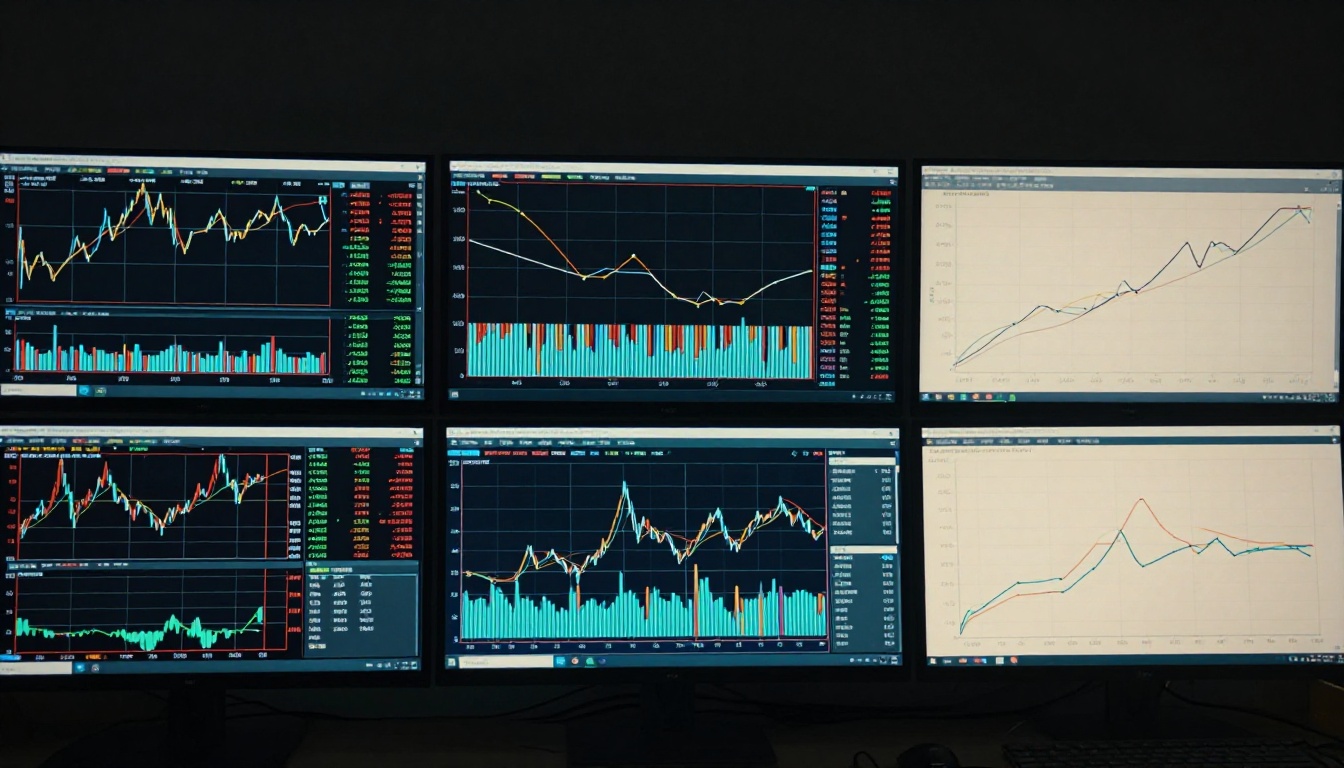
Most forex traders who blow their accounts do not fail because they picked the wrong strategy, but because they picked the wrong trading style. Scalping, day trading, and swing trading each demand different skills, schedules, and temperaments. A swing trader forced into scalping will overtrade and bleed out on spreads. A natural scalper stuck in swing trades will close winners early out of restlessness. Matching your style to your actual life — your schedule, your psychology, your capital — is one of the most important decisions you will make as a trader.
Here is what each style actually looks like in practice, what it demands from you, and how to figure out which one fits.
The Three Styles at a Glance
Before diving into the details, this comparison table lays out the key differences side by side. Study these numbers carefully — they reveal the real tradeoffs between speed and patience.
Scalping vs Day Trading vs Swing Trading
| Factor | Scalping | Day Trading | Swing Trading |
|---|---|---|---|
| Typical Timeframe | 1-min to 5-min charts | 15-min to 1-hour charts | 4-hour to daily charts |
| Trade Duration | Seconds to minutes | Minutes to hours | Days to weeks |
| Avg Profit Target | 5–15 pips | 20–50 pips | 100–300 pips |
| Risk Per Trade | 3–10 pips | 15–30 pips | 50–150 pips |
| Daily Screen Time | 4–8 hours | 2–5 hours | 30–60 minutes |
| Min Capital (practical) | $5,000+ | $2,000+ | $1,000+ |
| Spread Impact | High | Moderate | Low |
| Best Pairs | EUR/USD, USD/JPY | EUR/USD, GBP/USD | Any major or cross |
Scalping: Speed Over Everything
How It Works
Scalpers aim to extract tiny profits from very short-term price movements. A typical scalp trade lasts anywhere from 10 seconds to a few minutes. You are not trying to catch trends — you are trying to catch order flow imbalances, micro-pullbacks, and small range breakouts on the 1-minute or 5-minute chart.
A scalper might take 20 to 50 trades per day. Each trade targets a small number of pips — often 5 to 15 — and uses tight stop losses of a similar size. The math works through volume: many small wins that outweigh a manageable number of small losses.
What It Demands
Scalping is the most demanding style by far. You need sustained focus for hours straight, fast decision-making under pressure, and iron discipline on your exits. Hesitating for even a few seconds can turn a winning scalp into a loss. You also need a broker with tight spreads and fast execution — on a 10-pip target, a 2-pip spread means you are giving up 20% of your profit to costs before you even start.
Best for: Traders who thrive under pressure, have fast reflexes, can commit 4+ hours of uninterrupted screen time, and have enough capital to absorb the higher transaction costs.
Watch out for: Spread costs eating your edge, overtrading on revenge after losses, and burnout. Scalping is mentally exhausting. Most people who try it underestimate how draining it is to make 30+ high-speed decisions per day.
Day Trading: The Middle Ground
How It Works
Day traders open and close all positions within the same trading session. No overnight risk. Typical trades last from 30 minutes to several hours, and a day trader usually takes 2 to 8 trades per day. The analysis happens on 15-minute to 1-hour charts, often with a higher timeframe (4-hour or daily) for directional bias.
Profit targets are wider than scalping — typically 20 to 50 pips on major pairs — which means spread costs are a smaller percentage of each trade. Day traders often focus on specific sessions (London open, New York overlap) where volatility is highest and setups are cleanest.
What It Demands
Day trading requires 2 to 5 hours of focused time, ideally during high-volume market sessions. You need patience to wait for your setup and discipline to avoid forcing trades on slow days. The psychological challenge is different from scalping — instead of rapid-fire decisions, you are managing the temptation to overtrade during quiet periods and the emotional weight of holding a trade for an hour or more while it fluctuates against you before hitting your target.
Best for: Traders who can dedicate a consistent block of time each day to the markets, prefer a moderate pace, and want to avoid overnight exposure.
Watch out for: The temptation to "find" trades that are not there. On days with no clean setups, the best day trade is no trade at all. Many day traders slowly erode their accounts not through big losses, but through a steady stream of marginal trades taken out of boredom.
Swing Trading: Patience as an Edge
How It Works
Swing traders hold positions for days to weeks, capturing larger price moves on the 4-hour and daily charts. A swing trader might take only 2 to 5 trades per week — sometimes fewer. Profit targets are wide, often 100 to 300 pips, with stop losses of 50 to 150 pips to give the trade room to breathe.
Because the timeframes are larger, swing traders can do their analysis in the evening or early morning, place their orders, set their stops, and walk away. The trade manages itself. This makes swing trading the most compatible style with a full-time job or other commitments.
What It Demands
The challenge with swing trading is not speed — it is patience. You have to watch a trade go against you by 50 pips and not panic. You have to see unrealized profits build and resist the urge to close early. And you have to accept that some weeks, you will have zero setups and take zero trades. For action-oriented personalities, this inactivity feels unbearable.
You also carry overnight and weekend risk. A surprise news event while you are sleeping can gap the market against your position. Wider stop losses help absorb normal volatility, but black swan events can still cause slippage beyond your stop.
Best for: Traders with full-time jobs, those who prefer thorough analysis over quick reactions, and people with smaller accounts (since wider stops in pips are offset by smaller position sizes).
Watch out for: Swap fees eating into profits on longer holds, weekend gaps, and the psychological difficulty of doing "nothing" while a trade plays out over several days.
Example Trade Setups on EUR/USD
To make this concrete, here is how each style might approach the same pair — EUR/USD — with a realistic trade setup, appropriate position sizing for a $5,000 account, and what the profit and loss numbers actually look like.
Example EUR/USD Setups by Trading Style
| Parameter | Scalper | Day Trader | Swing Trader |
|---|---|---|---|
| Chart | 1-min | 15-min | Daily |
| Entry Signal | Order flow at support | Breakout of London range | Bounce off weekly trendline |
| Entry Price | 1.0850 | 1.0850 | 1.0850 |
| Stop Loss | 1.0843 (7 pips) | 1.0825 (25 pips) | 1.0750 (100 pips) |
| Take Profit | 1.0860 (10 pips) | 1.0890 (40 pips) | 1.1100 (250 pips) |
| Position Size | 1.0 lot | 0.4 lot | 0.1 lot |
| Risk (USD) | $70 | $100 | $100 |
| Reward (USD) | $100 | $160 | $250 |
| Risk:Reward | 1:1.4 | 1:1.6 | 1:2.5 |
| Spread Cost | $15 (1.5 pip) | $6 (1.5 pip) | $1.50 (1.5 pip) |
| Spread as % of Target | 15% | 3.75% | 0.6% |
Notice the spread cost row. The scalper gives up roughly 15% of their profit target to the spread on every single trade. The swing trader loses less than 1%. This is why scalpers need extremely tight spreads and high win rates to stay profitable — the cost structure works against them far more aggressively.
A Day in the Life: Typical Routines
Your trading style does not just determine when you trade — it determines how you spend your entire day. Here is what a typical routine looks like for each.
Typical Daily Routine by Trading Style
| Time of Day | Scalper | Day Trader | Swing Trader |
|---|---|---|---|
| Morning (pre-market) | Check economic calendar, avoid news | Review overnight action, mark levels | Check open trades, adjust stops if needed |
| Session Open | Actively trading 1-min charts | Watch for setup at London/NY open | No action unless entry triggers |
| Mid-Session | Continuous execution, 20–40 trades | Monitor 1–3 active positions | Check phone once; no screen needed |
| Afternoon | Wind down, review P&L, log trades | Close remaining positions before EOD | Evening analysis: scan daily charts |
| Post-Market | Detailed trade journaling | Trade review, prep next day levels | Place pending orders for next day |
| Total Screen Time | 4–8 hours | 2–5 hours | 30–60 minutes |
Which Style Fits You
There is no objectively "best" trading style. There is only the style that matches your constraints and temperament. Ask yourself these questions honestly:
- How much time can you actually dedicate? If you have a 9-to-5 job, scalping is off the table. Swing trading is your realistic option. Day trading is possible if your schedule overlaps with a major session.
- How do you handle stress? If rapid decision-making energizes you, scalping could work. If it makes you anxious, stay away.
- How patient are you? If watching a trade for three days without touching it sounds like torture, swing trading is not your style — no matter how "smart" it looks on paper.
- What is your capital situation? Scalping requires more capital to be practical because of higher transaction costs and the need for larger position sizes. Swing trading can work with smaller accounts since you are targeting bigger moves with smaller positions.
The best trading style is the one you can execute consistently without burning out, overtrading, or abandoning your rules. Everything else is secondary.
Risk Considerations
Regardless of which style you choose, the risk fundamentals are the same. Never risk more than 1–2% of your account on a single trade. Use stop losses on every position. And understand that all three styles have losing streaks — scalpers might lose 10 trades in a row on a bad day, swing traders might have two losing weeks straight. Your survival depends on position sizing, not on your win rate.
Also be realistic about costs. Scalpers need ECN-style accounts with raw spreads, which usually charge a commission per lot. Day traders can work with standard accounts if spreads are competitive. Swing traders should watch for swap fees, especially on pairs with large interest rate differentials — holding a short AUD/JPY for two weeks, for example, can cost you meaningful money in negative swap.
Key Takeaways
- Scalping, day trading, and swing trading differ fundamentally in timeframe, trade duration, profit targets, and lifestyle demands.
- Spread costs disproportionately hurt scalpers — factor this into your style choice.
- Your personality and schedule should drive the decision, not which style sounds most impressive.
- All three styles can be profitable, but none of them are easy. Each has distinct psychological challenges.
- Start by paper trading your chosen style for at least 2–4 weeks before committing real capital.
Looking for brokers, trading platforms, and investment tools? Browse our curated directory:
Disclaimer: This content is for educational purposes only and does not constitute financial advice. Trading involves substantial risk of loss. Past performance does not guarantee future results.