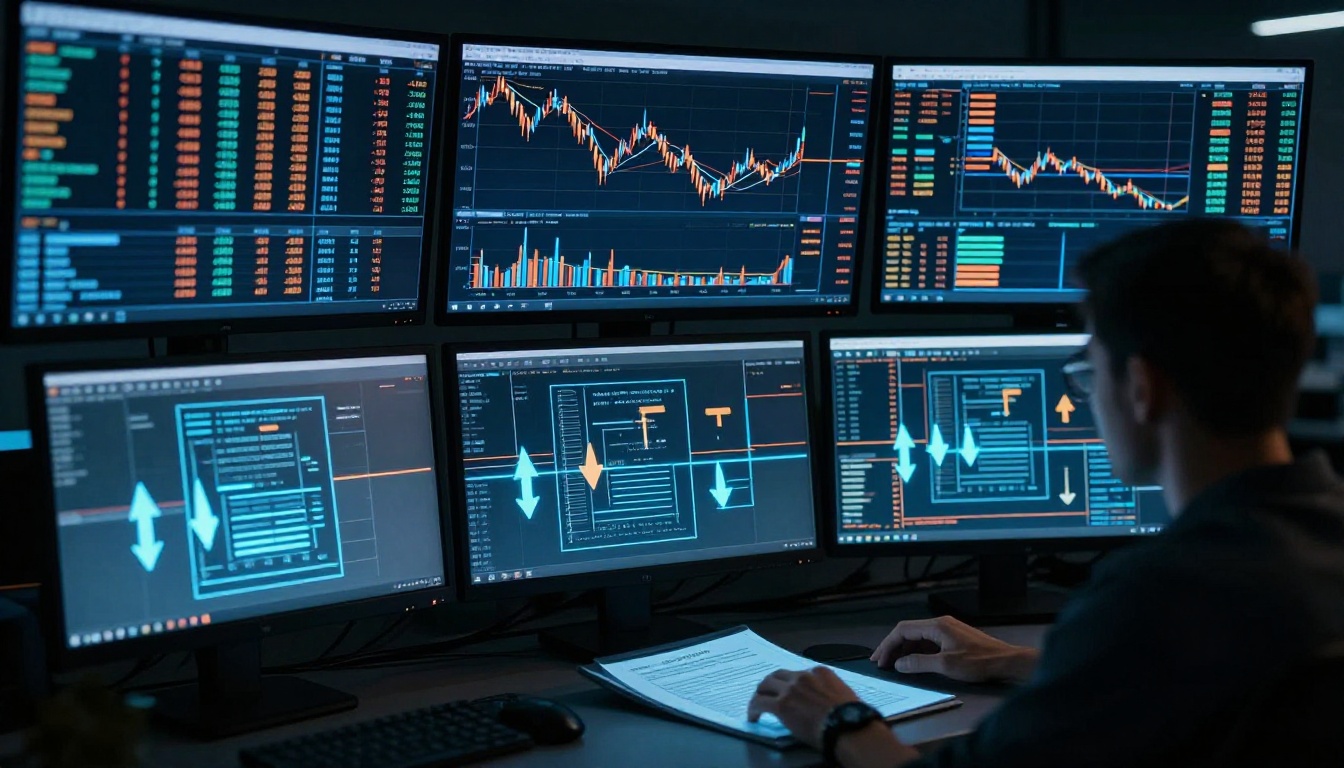
A CFD is a contract between you and your broker to exchange the difference in an asset's price from when you open the trade to when you close it. You never own the underlying asset. That single distinction shapes everything about how CFDs work, what they cost, and why regulators treat them differently from traditional investing.
CFDs are one of the most widely used retail trading instruments outside the United States. They offer leverage, the ability to go short as easily as going long, and access to thousands of markets from a single account. They are also responsible for significant losses among retail traders — something brokers are required to disclose, and something worth understanding before opening a position.
The Basic Concept: What a CFD Actually Is
CFD stands for Contract for Difference. When you trade a CFD, you are not buying or selling shares, barrels of oil, or ounces of gold. You are entering into an agreement with your broker that settles the price difference between entry and exit.
If you buy a CFD on a stock at $100 and close it at $110, you receive $10 per unit. If the price drops to $90, you lose $10 per unit. The mechanics mirror what would happen if you owned the stock — but legally and structurally, the two are different instruments. You have no voting rights, no dividend entitlement (though many brokers do pay dividend adjustments on share CFDs), and no claim on the underlying company.
The counterparty to your trade is typically the broker itself, not another trader on an exchange. This is called an over-the-counter (OTC) model, and it means the broker sets the prices, the spreads, and the terms. Some brokers hedge their exposure in the underlying market; others do not. This counterparty structure is one reason CFDs attract regulatory scrutiny.
How CFDs Work: Opening, Holding, and Closing
The lifecycle of a CFD trade has three phases, each with its own cost implications.
Opening a Position
You choose an asset — say, Apple stock trading at $185. You decide whether the price will go up (buy/long) or down (sell/short). You select your position size in units, and your broker calculates the margin required. With 5:1 leverage, a $10,000 position requires $2,000 in margin. That $2,000 is not a fee — it is capital held as collateral.
Holding the Position
For every day you hold a CFD position overnight, the broker charges an overnight financing fee (sometimes called a swap rate). This is essentially interest on the leveraged portion of the trade. On a $10,000 position with $2,000 margin, you are effectively borrowing $8,000 from the broker. The financing rate is typically the benchmark rate (like SOFR or EURIBOR) plus a markup, usually 2-3% annually. On short positions, you may receive a credit, but the markup often turns this into a small charge as well.
Closing the Position
You close by taking the opposite action. If you bought, you sell. The difference between your entry and exit prices, multiplied by your position size, determines your profit or loss. The broker releases your margin, adds or subtracts the P&L, and accounts for any financing charges accumulated during the holding period.
P&L Formula: (Exit Price - Entry Price) x Number of Units = Gross Profit/Loss
A trader going long 100 units of a stock CFD at $50, closing at $54, earns (54 - 50) x 100 = $400 gross profit. Going short at $50 and closing at $54 would produce a $400 loss. Subtract the spread cost and any overnight financing to get the net result.
What You Can Trade via CFDs
One of the main appeals of CFDs is market breadth. From a single brokerage account, traders can access thousands of instruments across asset classes.
CFD Market Coverage by Asset Class
| Asset Class | Typical Instruments | Leverage (EU Retail) | Spread Model |
|---|---|---|---|
| Share CFDs | Individual stocks (Apple, Tesla, BP) | 5:1 | Spread + commission |
| Index CFDs | S&P 500, DAX 40, FTSE 100, Nikkei 225 | 20:1 | Spread only |
| Forex CFDs | EUR/USD, GBP/JPY, 60+ pairs | 30:1 (majors) | Spread only |
| Commodity CFDs | Gold, oil, natural gas, wheat | 10:1 | Spread only |
| Crypto CFDs | Bitcoin, Ethereum, and others | 2:1 | Spread only |
| Bond/Rate CFDs | US Treasuries, Bund, Gilt | 5:1 | Spread only |
This breadth is genuinely useful. A trader who spots an opportunity in German equities, crude oil, and USD/JPY can execute all three trades from the same platform without needing separate accounts at a stock broker, a futures broker, and a forex broker. For those exploring commodity trading, CFDs offer one of the most accessible entry points — no futures contracts, no expiry dates, no physical delivery concerns.
CFDs vs. Owning the Underlying Asset
The question every new trader eventually asks: why not just buy the stock (or the ETF, or the commodity futures contract) directly? The answer depends on what you are trying to do.
CFDs vs. Direct Ownership
| Feature | CFD | Direct Ownership |
|---|---|---|
| Ownership of asset | No | Yes |
| Leverage available | Yes (broker-defined) | Limited (margin accounts) |
| Short selling | Easy (same as going long) | Requires borrowing shares |
| Overnight costs | Yes (daily financing) | No (once purchased) |
| Voting rights | No | Yes (shares) |
| Dividend adjustments | Cash adjustment (taxed) | Actual dividends |
| Exchange fees | None (OTC) | Exchange fees apply |
| Stamp duty (UK) | No | 0.5% on UK shares |
| Suitable for long-term holding | No (costs erode returns) | Yes |
| Suitable for short-term trading | Yes | Possible but less capital-efficient |
| Counterparty risk | Broker is counterparty | Exchange-cleared |
| Regulatory protection | Varies by jurisdiction | Standard investor protection |
The pattern is clear. CFDs are optimized for shorter-term, leveraged, directional trading — going long or short on price moves you expect to play out over hours, days, or at most a few weeks. They are poorly suited for buy-and-hold investing because overnight financing costs compound and gradually eat into returns. Holding a long CFD position on the S&P 500 for a year could cost 5-7% in financing alone, which would consume most of a typical annual return.
How Leverage Works in CFDs — and Why It Hurts
Leverage is the defining feature of CFDs, and also the primary reason most retail traders lose money with them. Understanding the mechanics is essential before trading with real capital.
When a broker offers 20:1 leverage on an index CFD, it means you can control a $20,000 position with $1,000 in margin. If the index rises 2%, your position gains $400 — a 40% return on your $1,000 margin. But if it falls 2%, you lose $400 — 40% of your margin gone.
Leverage multiplies both gains and losses by the same factor.
At 20:1 leverage, a 5% adverse move wipes out your entire margin. In volatile markets, this can happen in a single session. When your account equity falls below the broker's maintenance margin requirement (typically 50% of initial margin), you receive a margin call — a demand to deposit more funds or have positions forcibly closed. Under EU/UK regulations, brokers must close positions before your account goes negative (negative balance protection). In some other jurisdictions, traders can end up owing more than their deposit.
Leverage Impact on a $1,000 Margin Position
| Leverage | Position Size | 1% Move (Gain/Loss) | 5% Move (Gain/Loss) | Move to Wipe Margin |
|---|---|---|---|---|
| 2:1 | $2,000 | $20 (2%) | $100 (10%) | 50% |
| 5:1 | $5,000 | $50 (5%) | $250 (25%) | 20% |
| 10:1 | $10,000 | $100 (10%) | $500 (50%) | 10% |
| 20:1 | $20,000 | $200 (20%) | $1,000 (100%) | 5% |
| 30:1 | $30,000 | $300 (30%) | $1,500 (150%) | 3.3% |
The table makes the math unavoidable. At 30:1 leverage — the maximum permitted for major forex pairs under EU regulation — a mere 3.3% adverse move eliminates your entire margin. EUR/USD can move 3% in a week during volatile conditions. This is why position sizing discipline matters even more with CFDs than with unleveraged investments.
The Real Costs of CFD Trading
CFD trading involves several layers of cost that are easy to underestimate, especially for newer traders who focus only on the spread.
The spread is the difference between the buy (ask) and sell (bid) price. On a major index like the S&P 500, tight-spread brokers might offer 0.4-0.8 points. On less liquid instruments — small-cap share CFDs, exotic forex pairs, or niche commodities — spreads can be significantly wider.
Overnight financing is charged daily on positions held past the market close (typically 10pm GMT for most brokers). For a $10,000 position at a 6% annual financing rate, the daily charge is approximately $1.64. That adds up to roughly $50 per month — meaningful for positions that are held for weeks.
Commissions on share CFDs are common even at brokers that charge zero commission on index and forex CFDs. Typical rates are 0.05-0.10% of the position value, with a minimum charge of $5-10 per trade. So a $5,000 share CFD trade might cost $5 in commission each way.
Guaranteed stop-loss premiums are charged by some brokers for stop-loss orders that guarantee execution at your specified price, even through gaps. Regular stop-losses can slip in fast markets. The premium for guaranteed stops is typically added to the spread.
Currency conversion fees apply when trading instruments denominated in a different currency from your account. Trading US stock CFDs from a GBP account incurs a conversion charge, usually 0.3-0.5%, on every open and close.
Regulatory Landscape: Where CFDs Are Allowed
CFDs exist in a regulatory patchwork. They are a mainstream retail product in some jurisdictions and completely prohibited in others.
United States: CFDs are banned for retail traders. The SEC and CFTC do not permit them because they are OTC derivatives that bypass exchange regulation. US traders who want leveraged exposure use futures, options, or margin accounts instead.
European Union: The European Securities and Markets Authority (ESMA) imposed permanent leverage caps in 2018. Retail traders are limited to 30:1 on major forex, 20:1 on major indices, 10:1 on commodities, 5:1 on individual shares, and 2:1 on crypto. Brokers must display the percentage of retail accounts that lose money — which leads to the next section.
United Kingdom: The FCA follows similar rules to ESMA and additionally banned retail crypto CFDs in January 2021. Professional clients can access higher leverage but must meet qualification criteria.
Australia: ASIC implemented ESMA-style leverage caps in 2021 after years of lighter regulation. The Australian market was once known for offering 200:1 or even 500:1 leverage to retail traders.
Why Most Retail CFD Traders Lose Money
Every regulated CFD broker in the EU and UK is required to publish the percentage of retail client accounts that lose money. These numbers are remarkably consistent: typically between 70% and 82%. Some brokers report figures as high as 84%.
This is not a scare statistic designed to keep people out of markets. It is a regulatory disclosure based on actual account performance data. The reasons behind these numbers are structural, not mysterious:
- Overleveraging: Many retail traders use the maximum leverage available, meaning even small adverse moves generate outsized losses relative to their account.
- Holding costs: Traders who planned a short-term trade but hold through drawdowns accumulate overnight financing charges that erode their account even if the trade eventually comes back.
- Poor risk management: Trading without stop-losses, risking too much per trade, and averaging down into losing positions are common patterns.
- Overtrading: The ease of opening and closing CFD positions, combined with leverage, encourages excessive trading. Each trade carries spread costs, and high-frequency retail trading generates substantial cumulative friction.
- Asymmetric psychology: Traders tend to cut winners short and let losers run. With leverage, letting a loser run can destroy an account before the pattern becomes obvious.
None of these problems are unique to CFDs. But leverage amplifies every mistake, and the accessibility of CFD platforms means many traders encounter leveraged products before they have developed the discipline to use them safely.
When CFDs Make Sense
Despite the risks, CFDs serve legitimate trading purposes when used with appropriate risk controls.
Short-term directional trading: If you have a view on a stock, index, or commodity over the next few hours or days, CFDs let you express that view with capital efficiency. A swing trade on the DAX 40 that plays out over three days incurs minimal overnight costs and benefits from the ability to size the position precisely.
Short selling: Going short on a stock via CFDs is straightforward — you click sell instead of buy. No borrowing shares, no locate fees, no uptick rules. For traders who want to profit from declining prices, CFDs remove significant friction. Contrast this with put options, which also profit from declines but involve time decay and more complex pricing.
Hedging: A portfolio holder with a large position in UK equities might sell FTSE 100 index CFDs as a temporary hedge during an earnings season or political event, rather than liquidating the actual holdings. The CFD hedge can be opened and closed quickly without triggering capital gains on the underlying portfolio.
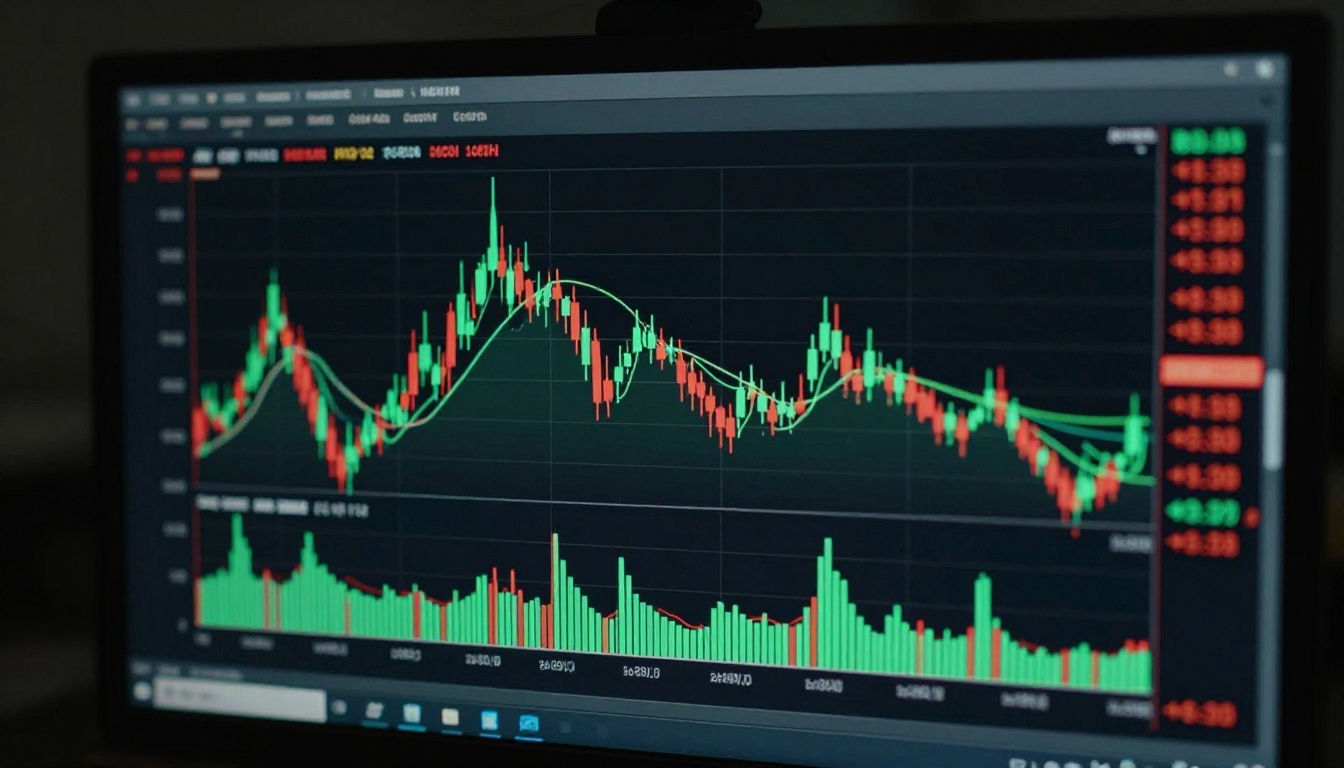
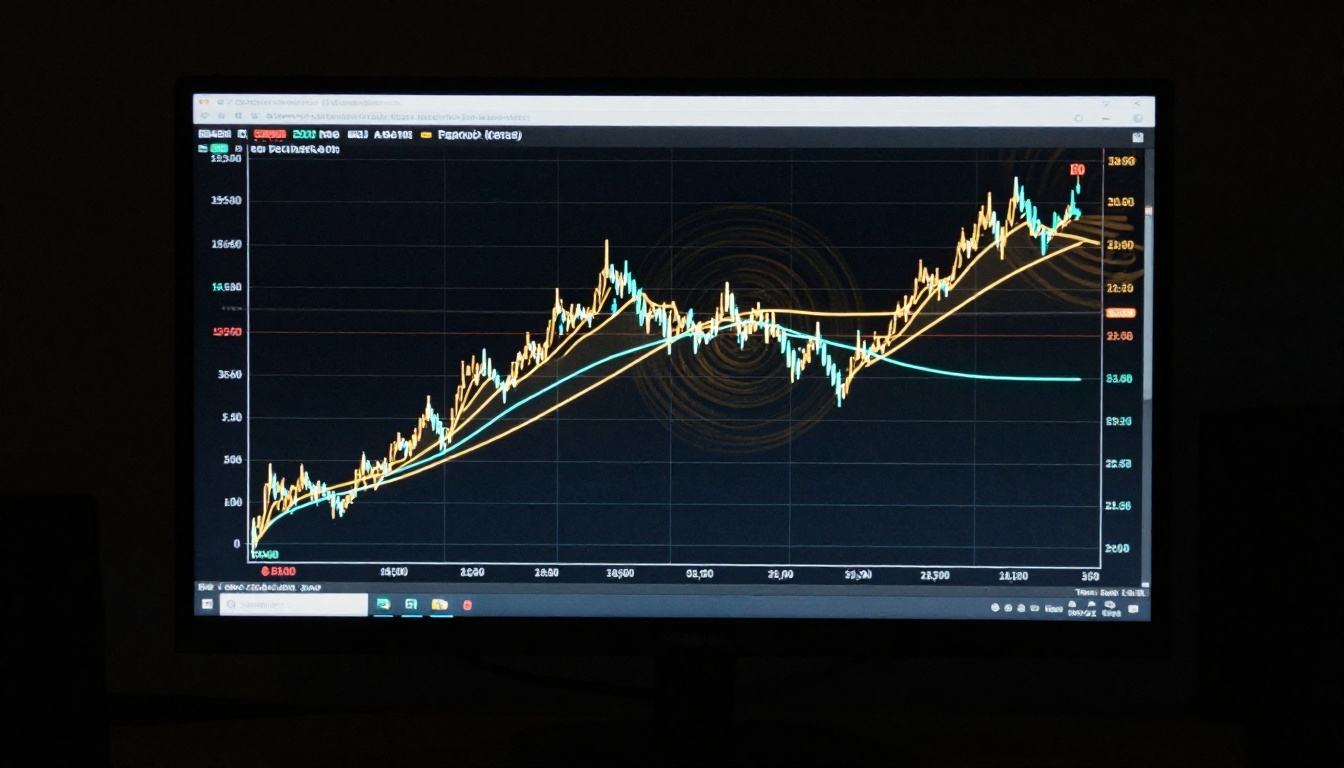
Multi-asset access: Traders who want exposure across stocks, indices, forex, and commodities benefit from the single-account convenience of CFDs. Reading price action on candlestick charts works the same way regardless of the underlying asset class — the CFD is just the vehicle.
When CFDs Do Not Make Sense
Long-term investing: If you plan to hold a position for months or years, the overnight financing costs will significantly erode your returns. Buy the actual shares, ETF, or fund instead.
Small accounts without strict risk rules: A $500 account with 20:1 leverage controls $10,000. A 2% adverse move costs $200 — 40% of the account. Without rigorous position sizing, small leveraged accounts tend to blow up. The statistics bear this out.
Income generation: CFDs are not designed for collecting dividends or earning yield. While dividend adjustments exist for share CFDs, the overnight financing charge typically exceeds the dividend income for long positions.
US-based traders: CFDs are not available. Futures, options, and margin trading serve similar purposes within the US regulatory framework.
Key Takeaways
CFDs are a powerful instrument for short-term, leveraged trading across multiple asset classes — but the same features that make them flexible also make them dangerous when used without discipline. The 70-80% retail loss rate is not an accident; it is the predictable outcome of leverage combined with insufficient risk management.
- A CFD is a contract to exchange the price difference of an asset — you never own the underlying.
- Leverage amplifies both gains and losses by the same factor. At 20:1, a 5% move doubles or wipes out your margin.
- Overnight financing costs make CFDs unsuitable for long-term holding.
- CFDs are banned in the US but widely available (with leverage caps) in the EU, UK, and Australia.
- 70-80% of retail CFD accounts lose money, per mandatory broker disclosures.
- CFDs work best for short-term directional trades, short selling, and portfolio hedging — not investing.
Disclaimer: This content is for educational purposes only and does not constitute financial advice. Trading involves substantial risk of loss. Past performance does not guarantee future results.